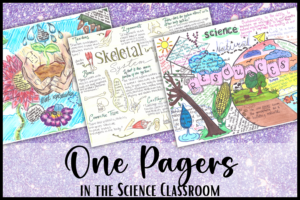

For years, I assigned many of the same projects most science teachers have used at one point or another. Students created posters, built models, or copied information from websites into slide presentations. While some projects turned out beautifully, I often found myself wondering how much actual learning had taken place.
Too often, students spent more time decorating than thinking. Some copied information without really understanding it, while others relied heavily on parents or the internet to complete the work. The finished products looked impressive, but they didn’t always demonstrate deep understanding.
That’s what led me to discover one-pagers, and they’ve become one of my favorite ways to assess student learning.
One-Pagers Require Students to Process Information
Unlike a traditional research project, a one-pager asks students to make decisions about what information is most important.
Students can’t simply copy an entire paragraph from a website or textbook. Instead, they have to summarize ideas, organize information, identify connections, and decide how to communicate their understanding using both words and visuals. This is differentiation on a whole new level.
That extra layer of thinking transforms the assignment from simple research into meaningful learning.
They Encourage Creativity Without Sacrificing Rigor
One concern I sometimes hear is that creative projects aren’t rigorous enough.
I’ve actually found the opposite to be true.
Creating an effective one-pager requires students to understand the content well enough to explain it in their own words, organize related ideas, create meaningful illustrations, and show connections between concepts. They aren’t just memorizing facts—they’re synthesizing information.
Every student’s final product looks different, but they’re all demonstrating the same learning objectives.
Students Actually Enjoy Making Them
Let’s be honest—middle school students enjoy opportunities to be creative.
One-pagers allow students to add personality to their work while still focusing on science content. They can use color, diagrams, labels, and illustrations to communicate ideas in ways that feel less restrictive than a traditional written report.
Even students who don’t consider themselves artists usually find success because the goal isn’t creating perfect artwork. It’s using visuals to support understanding.
Some of my favorite one-pagers are the ones with slightly imperfect drawings, creative layouts, and handwritten notes. They feel authentic because they truly reflect each student’s thinking.
They’re Great for Differentiation
One of the reasons I continue using one-pagers year after year is their flexibility.
Students who need more support can use teacher-provided guiding questions or graphic organizers, while students who are ready for a challenge can expand their thinking with additional research, examples, or real-world connections.
Because every student is working toward the same learning goal, it’s easy to differentiate without creating several completely different assignments.
They Combine Science and Literacy Skills
Science isn’t just about memorizing vocabulary or completing labs. Students also need to communicate scientific ideas clearly.
One-pagers naturally integrate literacy skills by asking students to:
- Summarize information.
- Explain scientific concepts.
- Use evidence to support ideas.
- Organize information logically.
- Connect vocabulary to visuals.
Students are practicing reading, writing, and critical thinking while learning science content at the same time.
They’re Easy to Display

One unexpected benefit of one-pagers is how easy they are to showcase.
Unlike bulky projects that take up valuable classroom space, one-pagers can be displayed on bulletin boards, hallway walls, or classroom doors. Students love seeing their work on display, and the finished projects often become review tools for future classes.
Walking through a hallway filled with student-created one-pagers is a great reminder that every student can communicate scientific understanding in a unique way.
Assessing Them Is Simpler Than You Think
At first, I worried that grading creative projects would be subjective.
The solution was creating a simple rubric focused on learning rather than artistic ability.
Instead of grading students on how well they draw, I assess things like:
- Accuracy of scientific information
- Completeness
- Organization
- Use of evidence
- Depth of understanding
- Connections between ideas
This keeps the focus exactly where it belongs—on science learning.
They Become Study Guides
One of my favorite things about one-pagers is that the learning doesn’t end when students turn them in.
I often return them before quizzes, unit tests, or final exams because they make excellent review tools. Students have already organized the most important information, highlighted key vocabulary, and created visuals that help them remember difficult concepts.
Many students tell me they prefer studying from their own one-pagers rather than reading through pages of notes because everything they need is summarized on a single page.
Final Thoughts
Traditional projects still have their place, but one-pagers have become one of my favorite ways to assess understanding because they require students to think, organize, create, and communicate all at the same time.
Instead of rewarding students for how much information they can copy, one-pagers challenge them to demonstrate what they truly understand. They combine creativity with critical thinking, encourage deeper learning, and produce authentic work that students are proud to share.
If you’re looking for an engaging alternative to traditional science projects, a one-pager might become one of your favorite classroom activities too.
Featured Resource
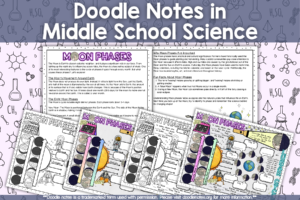
Looking for ready-to-use one-pager activities? My Science One-Pager Collection includes NGSS-aligned topics designed specifically for middle school students. Each resource features thoughtfully crafted guiding questions that encourage critical thinking, creativity, and meaningful connections while giving students the freedom to demonstrate their understanding in their own unique way. They’re perfect for independent projects, end-of-unit assessments, enrichment activities, or review.