Hands-on projects in science can be powerful… or they can turn into a glue-covered disaster with very little learning to show for it. We’ve all seen it. Students are busy. They’re cutting, coloring, assembling. And when you ask what they learned? The answers are… vague.
That’s why structure matters.
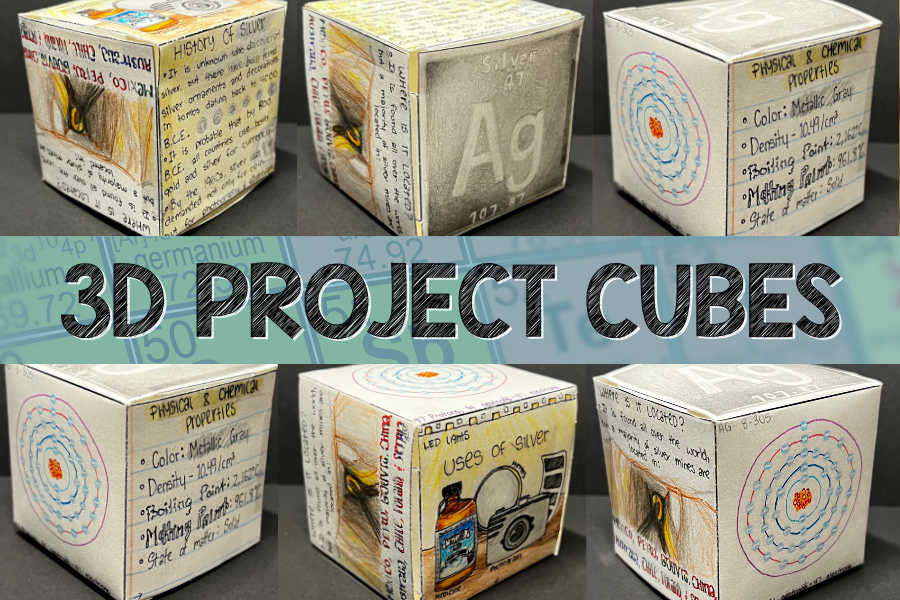
3D project cubes work in science class not because they’re flashy, but because they combine hands-on engagement with clear academic expectations. When designed intentionally, they make abstract concepts tangible without sacrificing rigor.
Browse my 3D Project Cube collection here.
Why Hands-On Learning Needs Structure
Middle school students benefit from hands-on learning, but only when the task actually requires thinking.
Without structure, projects often become:
-
Craft-focused instead of concept-focused
-
Time-consuming with low instructional payoff
-
Difficult to assess meaningfully
3D project cubes solve this by giving students a clear framework for organizing and explaining their thinking.
Each face of the cube has a purpose. Students aren’t just building something—they’re using the structure to process content.
What 3D Project Cubes Ask Students to Do
Well-designed 3D project cubes go beyond recall. They require students to engage with content in multiple ways.
Depending on the topic, students might:
-
Define and apply vocabulary
-
Explain processes or systems
-
Make connections between ideas
-
Represent concepts visually
-
Justify their thinking with examples
That combination of visual, spatial, and written thinking is especially powerful in science, where so many concepts are abstract.
Why They Support More Than One Type of Learner
Like most effective science strategies, 3D project cubes aren’t just for one group of students.
They work well because they:
-
Reduce cognitive overload by chunking information
-
Provide visual structure for complex ideas
-
Allow students to show understanding in multiple ways
Struggling students benefit from the clear organization.
High-achieving students benefit from the opportunity to extend and deepen their explanations.
Same task. Different levels of thinking.
They’re Ideal for Review and Assessment
One of my favorite uses for 3D project cubes is during review or as an alternative assessment.
They work especially well when you want to:
-
Check understanding without another test
-
Review key concepts before an assessment
-
Give students a meaningful way to synthesize learning
Because students are explaining ideas across multiple cube faces, you get a clearer picture of what they actually understand—not just what they memorized.
If review days in your classroom sometimes feel loud but not productive, shifting toward structured review tasks like this can make a big difference. I talk more about that in how to make review days meaningful (not just loud).
Easy to Reuse Across Topics
Another reason 3D project cubes work so well? They’re flexible.
Once students understand the format, you can use them for:
-
Life science, physical science, or Earth science
-
Independent or group work
-
In-class activities or take-home projects
The structure stays consistent, which means less explaining for you and more thinking for students.
(Consistency is doing a lot of heavy lifting here.)
The Bottom Line
3D project cubes aren’t about making science “cute” or filling time. They’re about giving students a concrete way to organize, explain, and apply complex ideas.
When projects are structured, hands-on learning becomes meaningful—not chaotic.
And honestly? If a project helps students think deeply and gives you something you can actually assess, it’s worth keeping in your rotation.