
Teaching science to middle schoolers with learning disabilities isn’t about lowering expectations or simplifying content until it loses meaning. It’s about designing instruction that actually lets students access the thinking.
And no—what they need isn’t a completely separate curriculum or five different lessons running at once.
What they need is clarity, structure, and intentional support built into everyday instruction.
The Problem Isn’t Ability—It’s Access
Many students with learning disabilities are fully capable of understanding science concepts. The barrier is often how the information is presented and how much students are expected to manage at once.
Common challenges include:
-
Processing large amounts of information quickly
-
Organizing ideas and materials
-
Holding multiple steps in working memory
-
Reading dense scientific text while also extracting meaning
When instruction assumes students can do all of that simultaneously, understanding breaks down—not because students can’t learn science, but because the demands are unrealistic.
Clear Structure Is Non-Negotiable
Structure isn’t restrictive—it’s supportive. For students with learning disabilities, predictable routines reduce anxiety and free up mental energy for learning.
Effective structure includes:
-
A consistent lesson flow
-
Clear expectations for tasks and behavior
-
Explicit modeling of what “good work” looks like
This doesn’t make lessons boring. It makes them accessible.
I rely on the same core structure for every topic because it allows students to focus on content, not confusion. I explain that approach more fully in my go-to lesson structure for any science topic.
Visual Supports Matter More Than We Admit
Science is abstract by nature. Expecting students with learning disabilities to process it primarily through text is a setup for frustration.
Visual supports help by:
-
Making relationships between ideas visible
-
Reducing language load
-
Supporting memory and recall
-
Clarifying complex processes
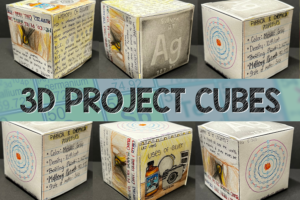
Tools like diagrams, models, one-pagers, and doodle notes don’t water down instruction—they strengthen it.
I break down why this matters for all learners (not just students with IEPs) in the power of visual learning in science class.
Fewer Words. Better Thinking.
One of the biggest misconceptions in special education is that more explanation equals more support.
In reality, students with learning disabilities often benefit from:
-
Concise directions
-
Key vocabulary highlighted in context
-
Reduced copying and transcription
This is where tools like guided notes and fill-in-the-blank formats help. They remove busywork so students can focus on reasoning, not handwriting endurance. (If a student understands the concept but can’t write three paragraphs about it, that’s not a science problem.)
Processing Time Is Not Optional
Middle schoolers with learning disabilities often need more time to process—not because they’re slower thinkers, but because they’re juggling more cognitive demands.
Effective science instruction:
-
Builds in pause points
-
Allows students to revisit ideas
-
Includes frequent, low-pressure checks for understanding
Rushing through content benefits no one—especially students who need time to make meaning.
High Expectations Still Matter
Support does not mean lowering the bar. Students with learning disabilities still need opportunities to:
-
Explain their thinking
-
Use evidence
-
Make connections
-
Revise ideas
The difference is how they get there. When instruction is structured, visual, and intentional, more students can meet high expectations without unnecessary barriers.
The Bottom Line
Middle schoolers with learning disabilities don’t need a different science class.
They need a better-designed one. When lessons are clear, visual, and thoughtfully scaffolded, students spend less time feeling overwhelmed—and more time actually learning science. And honestly? Those same strategies end up helping everyone.