After years of teaching science, I’ve learned this the hard way: it’s not the topic that makes a lesson work—it’s the structure.
When lessons fall apart, it’s rarely because the content is bad. It’s because the flow is unclear, transitions eat up time, or students don’t know what they’re supposed to be doing (or why).
Once I stopped reinventing lessons and started relying on a consistent structure, everything changed. Planning got easier. Classroom management improved. Student understanding went up. My stress level went down. Imagine that.
This is my go-to lesson structure for any science topic—and why it works.
Why Lesson Structure Matters in Science Class
Science content is dense. Vocabulary-heavy. Concept-driven. Asking students to process all of that without a clear structure is a recipe for confusion.
A consistent lesson structure:
-
Reduces cognitive overload
-
Saves instructional time
-
Creates predictable routines for students
-
Allows you to focus on teaching, not troubleshooting
Structure doesn’t make lessons boring. It makes them work.
Step 1: Start With a Thinking-Focused Warm-Up
I don’t use warm-ups as busywork. They exist for one reason: to activate thinking.
A strong science warm-up might ask students to:
-
Predict an outcome
-
Interpret a diagram
-
Respond to a “why do you think…” question
-
Recall a key idea from a previous lesson
It’s short. It’s focused. And it immediately signals that class is about thinking, not just sitting.
Step 2: Deliver New Content With Visuals and Purpose
This is where a lot of lessons go off the rails—too much talking, too many slides, not enough processing.
When introducing new content, I focus on:
-
Clear explanations
-
Visual support (diagrams, models, examples)
-
Strategic pauses for questions or discussion
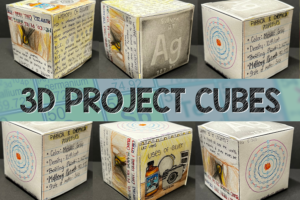
This is where tools like Cornell notes, doodle notes, or guided visuals shine. They give students a place to organize information while they’re learning it.
If visual learning is a big part of your instruction (as it should be in science), I break down why it works so well in the power of visual learning in science class.
Step 3: Build in Processing Time (Non-Negotiable)
This is the most important part of the lesson—and the one that’s easiest to skip when time gets tight.
Students need time to do something with the information.
That might look like:
-
Answering analysis questions
-
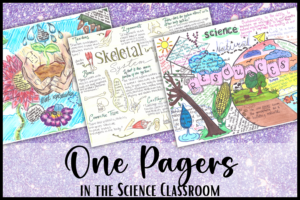
Completing part of a one-pager
-
Explaining a concept to a partner
-
Applying ideas to a new scenario
Processing is where learning actually happens. Without it, lessons feel smooth—but understanding stays shallow.
Step 4: Check for Understanding Before You Move On
I don’t wait until the test to find out what students didn’t get. I check constantly—and quickly.
Effective checks for understanding include:
-
Exit tickets
-
Short written explanations
-
One targeted question everyone must answer
-
Reviewing a single key misconception
This step keeps small gaps from turning into big problems.
Step 5: End With Closure (Even If It’s Brief)
Closure doesn’t need to be fancy. It just needs to exist.
A strong close might:
-
Revisit the learning goal
-
Ask students to summarize one key idea
-
Preview what’s coming next
This final step helps students organize their thinking—and gives the lesson a sense of completion.
Why This Structure Works for Any Science Topic
This lesson structure works because it’s flexible. You can use it for:
-
Labs
-
Notes days
-
Review lessons
-
Skill-based instruction
-
Content-heavy topics
It provides consistency without rigidity. Students know what to expect, but the learning itself still varies.
This same focus on systems and routines is also a powerful way to reduce overwhelm. I talk more about that connection in from overwhelmed to organized: how systems change everything in science class.
The Bottom Line
You don’t need a brand-new strategy for every science topic. You need a strong structure you can rely on.
When lesson flow is consistent, everything else becomes easier—planning, management, engagement, and understanding.
And honestly? Anything that makes teaching feel more manageable without lowering expectations is worth keeping.