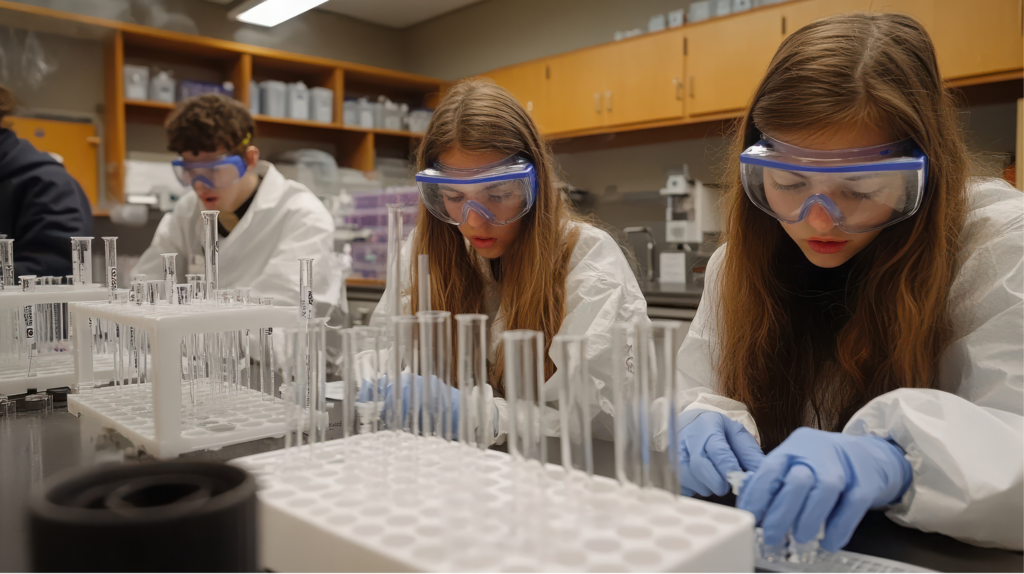
Lab days are often the moments we imagine when we think about teaching science—hands-on learning, curiosity, and discovery. In reality, they can also feel overwhelming. Materials end up everywhere, questions come nonstop, some groups rush ahead while others stall, and you’re trying to manage safety, learning, and behavior all at once. It’s a lot.
The good news is that lab days don’t need to feel chaotic to be effective. With a few intentional shifts, they can become structured, purposeful, and far less stressful—for both you and your students.
One of the biggest mistakes teachers make is thinking lab days start when materials are passed out. In reality, they start with expectations. Before students touch anything, it’s worth taking a few minutes to clearly explain what the lab should look and sound like. When students know how materials will be distributed, what noise level is expected, how to ask for help, and what to do if they finish early, the room immediately feels more controlled. Clear expectations up front prevent countless interruptions later.
Directions are another major source of stress on lab days. Verbal instructions disappear the moment students begin working, which often leads to repeated questions and confusion. Keeping directions visible—either projected or printed—gives students something they can reference independently. Simple, step-by-step directions reduce frustration and allow students to problem-solve before seeking help, which frees you up to focus on meaningful support instead of repeating instructions.
Lab days also run more smoothly when students are expected to work independently within a clear structure. When every step depends on teacher approval, the pressure quickly builds. Visual checklists, guided reflection prompts, and defined group roles help students stay focused and move forward with confidence. Independence doesn’t mean students are left on their own—it means they’re given the tools to succeed without constant intervention.
During the lab itself, movement matters. Circulating with intention—rather than reacting to every raised hand—helps maintain order and focus. Checking in with groups that are confused, off-task, or struggling allows you to redirect issues before they escalate. Asking guiding questions instead of giving answers keeps students thinking while reducing your own cognitive load.
Finally, lab days should end with learning, not just cleanup. Taking even a few minutes to reflect helps students make sense of what they observed and why it matters. When students explain results, identify errors, or connect the activity back to the objective, labs become more than hands-on experiences—they become meaningful learning moments.
Lab days don’t need a complete overhaul to feel better. Often, it’s one small routine, one reflection question, or one clear expectation that makes the biggest difference. Those small changes create a ripple effect—less stress, smoother transitions, and stronger understanding.
That’s The Science Effect in action.
If you’re looking for one small shift that makes lab days feel instantly more manageable, start with a checklist. Having a simple, visual guide for before, during, and after the lab keeps both you and your students grounded in the process. It reduces forgotten steps, cuts down on repeated questions, and gives students a clear sense of what “on track” looks like.
Want to make lab days run smoother? Grab my Lab Day Checklist—free when you join The Science Effect newsletter. It’s designed to help you prep quickly, set expectations clearly, and stay focused on student learning—not damage control. Think of it as a calm anchor on the days that have the most moving parts.
Sometimes all it takes is one small tool to create a smoother lab day—and that’s exactly the kind of ripple The Science Effect is all about.