One of the biggest challenges in teaching science isn’t delivering content—it’s knowing whether students truly understand it. Quizzes and worksheets can show who memorized definitions or followed steps, but they don’t always reveal who can explain ideas, make connections, or apply concepts in new situations.
That’s why one-pagers have become one of my most reliable tools for checking real understanding in science.
What Is a One-Pager?
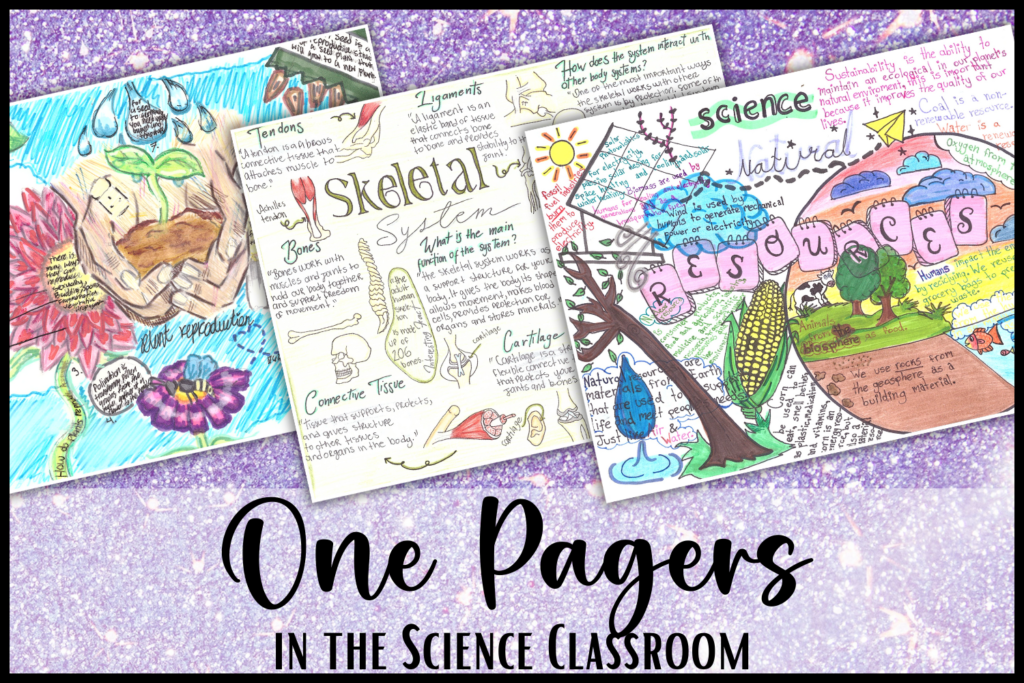
A one-pager is a single page where students demonstrate their understanding of a topic using a combination of words, visuals, diagrams, and symbols. Rather than copying information, students must decide what matters most and how ideas connect.
When students create a one-pager, they are forced to process information at a deeper level. They have to organize their thinking, use scientific vocabulary intentionally, and represent ideas in ways that make sense to them.
Why One-Pagers Work So Well in Science
Science learning is built on relationships—between systems, processes, and evidence. One-pagers naturally support this kind of thinking because they ask students to synthesize information rather than list facts.
As students work, they’re making decisions about importance, structure, and clarity. They’re showing how concepts relate to one another and using models or diagrams to explain processes. All of this provides insight into how well they truly understand the content.
How I Use One-Pagers to Check Understanding
I don’t use one-pagers as art projects. I use them as thinking tools.
I typically assign a one-pager after students have engaged with the content through notes, labs, readings, or discussions. At that point, the one-pager becomes a synthesis task where everything comes together.
Instead of vague directions, I give clear prompts that guide their thinking. Students might be asked to explain how processes are connected, show cause-and-effect relationships, compare related concepts, or support ideas with examples from class. These prompts keep the focus on scientific reasoning rather than decoration.
Depending on the unit, I use one-pagers as a formative check to guide instruction or as a summative assessment in place of a traditional quiz.
What One-Pagers Reveal That Tests Don’t
One-pagers make student thinking visible. 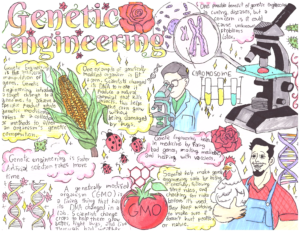 Misconceptions stand out quickly—missing steps in a process, incorrect connections, or oversimplified explanations are easy to spot. At the same time, students with strong understanding often demonstrate depth in ways that wouldn’t show up on a multiple-choice test.
They’re also especially powerful for diverse learners. Students who struggle with long written responses can still show deep understanding through labeled diagrams, models, and concise explanations.
Grading Without the Stress
I keep grading focused on content rather than creativity. I look for scientific accuracy, completeness of required concepts, clarity of explanations, and appropriate use of vocabulary and visuals. As long as students meet those expectations, their design choices are secondary.
This approach makes grading efficient and keeps feedback meaningful.
Why I Keep Coming Back to One-Pagers
One-pagers encourage students to slow down and think deeply about what they’re learning. Instead of asking, “What’s the right answer?” they start asking, “How do these ideas fit together?”
For me, that shift makes one-pagers one of the most valuable tools in my science classroom.