When people hear the word accommodations, they often picture major lesson changes, separate materials, or completely different expectations. In reality, some of the most effective accommodations in science are small, quiet, and built right into everyday instruction. They don’t change what students learn. They change how accessible the learning is.
And yes—many of them help far more students than the ones they were originally designed for.
The Problem Isn’t Rigor—It’s Overload
Science asks students to do a lot at once:
-
Read complex text
-
Process new vocabulary
-
Interpret visuals and data
-
Follow multi-step procedures
-
Explain their thinking clearly
For many students, especially those with learning disabilities, that cognitive load becomes the barrier—not the science itself. Small accommodations work because they remove unnecessary obstacles without removing the thinking.
Clear Directions (Written and Visual)
One of the simplest—and most powerful—accommodations is clarity. Instead of relying on verbal directions alone, effective science instruction includes:
-
Written steps students can reference
-
Visual cues or icons
-
Explicit modeling of expectations
This reduces repeated questions, prevents confusion, and helps students stay focused on the task instead of worrying about what they missed. (And yes, it also helps the students who were “listening” but somehow missed everything.)
Reduced Copying, Better Thinking
Copying long chunks of notes or procedures is rarely the best use of instructional time—especially in science.
Small accommodations like:
-
Guided notes
-
Fill-in-the-blank formats
-
Pre-written lab steps
allow students to focus on reasoning, analyzing, and explaining instead of handwriting endurance. If a student understands convection but can’t copy three paragraphs about it fast enough, that’s not a content issue—it’s a design issue.
Visual Supports That Clarify Ideas
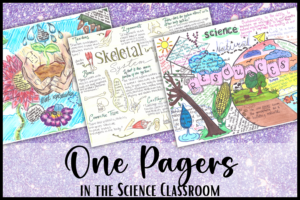
Science is abstract by nature. Visual supports help make it concrete. Effective visual accommodations include diagrams and models, labeled visuals, doodle notes or one-pagers. These supports reduce language load and help students see how ideas connect. They don’t lower expectations—they make understanding possible.
I break this down more deeply in the power of visual learning in science class, where I explain why visuals aren’t optional in science instruction.
Extra Processing Time (Without Calling It Out)
Not every accommodation needs to be announced or obvious.
Building in think time before answering, pauses during instruction, and flexible pacing within a task allows more students to process information fully—without singling anyone out. Quiet accommodations like this often have the biggest impact.
Flexible Ways to Show Understanding
Another small shift with a big payoff: letting students show what they know in more than one way.
Instead of one rigid output, students might:
-
Write a short explanation
-
Label and explain a diagram
-
Complete a structured response
Everyone meets the same learning goal—but the path there looks slightly different. This is one reason I focus on designing lessons that are flexible from the start. I talk more about that approach in how I differentiate science without creating 5 different lessons.
Consistent Routines Reduce Anxiety
Predictability is an accommodation many students need—but rarely receive.
Consistent lesson routines:
-
Reduce anxiety
-
Support executive functioning
-
Help students focus on content instead of transitions
When students know what to expect, they can put their energy into learning instead of surviving the class period.
The Bottom Line
Small accommodations aren’t about lowering the bar. They’re about clearing the path so more students can reach it. When science instruction is clear, visual, structured, and flexible, students spend less time feeling overwhelmed—and more time actually thinking like scientists.
And honestly? Most of these accommodations make your life easier too. Which feels like a fair bonus.