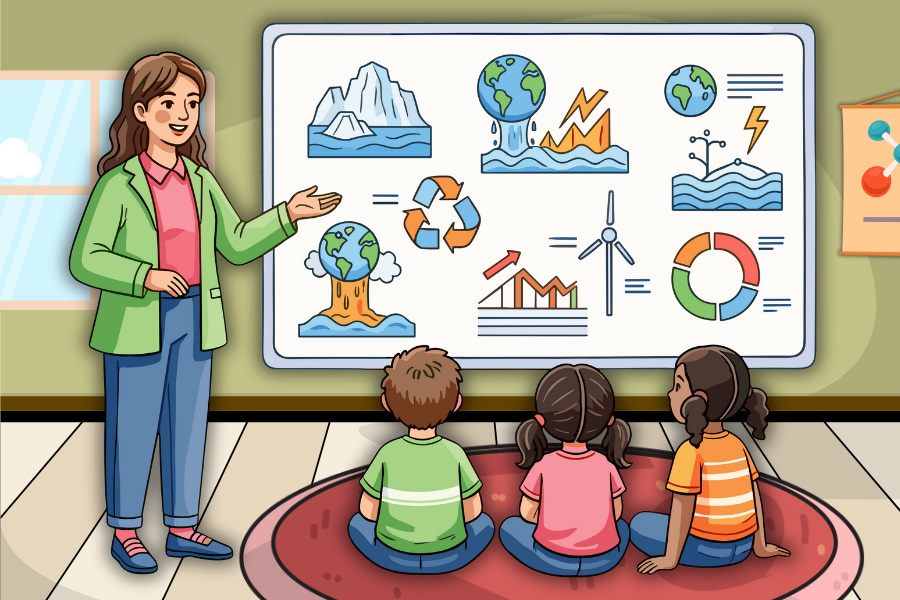
Science is visual by nature. Models, diagrams, graphs, processes, systems—so much of what students are expected to understand can’t be grasped through text alone.
And yet, many science lessons still rely heavily on reading, listening, and copying notes.
When students struggle, it’s often not because the content is too hard. It’s because they can’t see how ideas fit together.
Visual learning changes that.
Why Visual Learning Matters in Middle School Science
Middle school students are still developing abstract thinking skills. Asking them to process dense information without visual support is like asking them to build a puzzle without seeing the picture on the box.
Visual learning helps by:
-
Making abstract concepts concrete
-
Showing relationships between ideas
-
Reducing cognitive overload
-
Supporting memory and recall
In science class, visuals aren’t an extra—they’re essential.
Visuals Support Understanding, Not Just Engagement
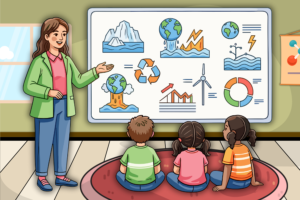
There’s a misconception that visuals are only for engagement or “fun.” In reality, they play a critical role in comprehension.
Effective visuals help students:
-
Organize information logically
-
Identify patterns and cause-and-effect relationships
-
Focus on key ideas instead of surface details
When visuals are intentional, they support deeper thinking—not just prettier notes.
Where Doodle Notes Fit In (And Why They Work)
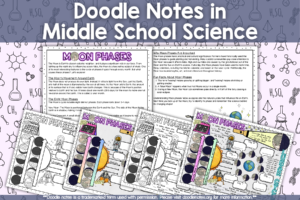
Doodle notes often get dismissed as artsy or off-task—but when designed well, they’re a powerful visual learning tool.
Doodle notes work because they combine:
-
Visual cues
-
Strategic text
-
Spatial organization
-
Student interaction
Students aren’t just coloring for the sake of coloring. They’re processing information as they add symbols, arrows, labels, and emphasis.
In science class, doodle notes are especially effective for:
-
Cycles and processes
-
Systems with multiple parts
-
Vocabulary-heavy topics
-
Cause-and-effect relationships
They slow students down just enough to think—without overwhelming them.
Visual Learning Still Needs Structure
Here’s the part that matters most: visuals don’t replace structure. They work because of it.
Without clear expectations, visual activities can turn into:
-
Random coloring
-
Incomplete notes
-
Confusion about what actually matters
Structured visual tools—like guided doodle notes, labeled diagrams, or one-pagers—give students boundaries while still allowing flexibility.
This same balance between structure and engagement shows up across effective instruction, including note-taking and classroom routines. I talk more about that balance in why Cornell notes still work in middle school science.
Visual Learning Supports All Learners (Not Just “Visual” Ones)
Visual strategies aren’t just for a specific learning style. They support:
-
English language learners
-
Students with executive functioning challenges
-
Struggling readers
-
High-achieving students who benefit from synthesis
When information is presented visually, more students can access it—and more students can explain their thinking.
The Bottom Line
Visual learning isn’t about making lessons cuter or easier. It’s about making learning clearer.
When students can see how ideas connect, science stops feeling like a list of facts and starts making sense. Tools like diagrams, one-pagers, and doodle notes don’t water down instruction—they strengthen it.
And honestly? If students understand more and you repeat yourself less, everyone wins.