
Some days, your science class feels like it’s running on borrowed time. Assemblies, testing windows, fire drills, shortened periods, surprise schedule changes—suddenly your carefully planned lesson has been cut in half.
When time is tight, it’s easy to feel like meaningful science instruction has to be sacrificed. But the truth is, effective learning can still happen—as long as you focus on the strategies that give you the biggest instructional return.
Here’s what still works when your science class is on a short schedule.
Start With a Clear Learning Target (Even If It’s Brief)
When time is limited, clarity matters more than ever. Students need to know exactly what they are supposed to learn—otherwise precious minutes get lost in confusion.
A strong learning target:
-
Is student-friendly and specific
-
Focuses on one key concept or skill
-
Can be referenced verbally if writing it out isn’t possible
Even a 30-second explanation of the goal helps students filter information and stay focused during a rushed lesson.
Use Structured, High-Impact Activities
Short classes aren’t the time for open-ended exploration without guardrails. Instead, rely on activities that are predictable, efficient, and cognitively demanding.
These formats work well under time pressure:
-
One-pagers that require synthesis, not copying
-
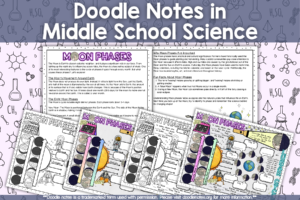
Doodle notes with key questions already embedded
-
Targeted review games with clear rules and quick transitions
Structure reduces setup time—and keeps students engaged from the start.
Prioritize Thinking Over Coverage
Trying to “get through” content during a short period often backfires. Students may hear the information, but they don’t process it deeply.
Instead, ask:
-
What’s the one idea students must understand today?
-
How can they show that understanding quickly?
A short written explanation, labeled diagram, or claim-evidence response can reveal far more learning than racing through multiple slides.
Build in Accountability—Fast
When time is tight, accountability keeps students on task without constant redirection.
Quick accountability strategies include:
-
Collecting a single response at the end of class
-
Cold-calling using sentence starters
-
Exit prompts students must complete before lining up
These routines create urgency and signal that learning still matters—no matter how short the period.
Accept That “Small” Still Counts
Not every class can be a full lab or a perfectly paced lesson—and that’s okay. A focused discussion, a well-chosen question, or a short reflection can still move learning forward.
Small, intentional moments add up over time.
When schedules shrink, instruction doesn’t have to disappear—it just has to be purposeful.
Final Thought
Short classes test our flexibility as teachers, but they also sharpen our priorities. When you focus on clarity, structure, and thinking, science learning doesn’t stop—it adapts.
And sometimes, those tight, focused lessons end up being the most effective ones of all.